The first, unique and innovative was Pure View 808 with Symbian. Nokia did not go with the flow, possibly due to the abandonment of the system. However, there’s going to be something new. Nokia EOS is to be a hit.
Rumours about the next Nokia smartphone with a decent camera module have been there for a long time, but there is no official confirmation from the manufacturer what makes that all the considerations do not seem to have any value.
My Nokia Blog seems to have the information, if not from the first, at least from the other hand. Apparently, someone closely associated with the manufacturer shared revelations.
In the Nokia’s laboratory, there are reportedly being tested two EOS structures with similar technical specifications, albeit with different processors. One is a dual-core CPU and the other is a quad-core Snapdragon 800.
The weakness of the second version is the result of a very poor battery performance, resulting in a short circuit operation on a single charge. This may mean, unfortunately, a need to select a dual-core processor, which perfectly copes with image processing, but at the same time makes that it will be difficult for the new smartphone to compete with the flagship devices from other manufacturers.
 |
|||
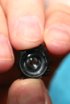
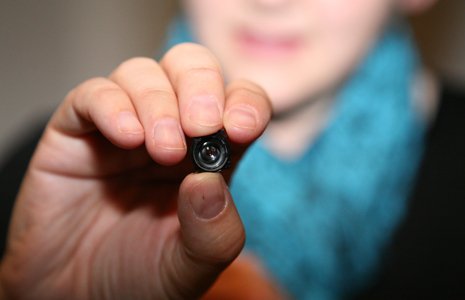
| Pure View lens photo: Nokia |
|||
Nokia EOS would have a similar battery to Lumia 920 (2000 mAh), as well as HD AMOLED display (768x1280 pixels). The camera will probably be at least as good as in Pure View 808. We can expect a minimum 41-megapixel sensor, two LED flashes + Xenon, image stabilization, and - perhaps - lens with a variable aperture, as in the N86.
Apart from the impressive camera module, the Nokia EOS would have FM transmitter, a slot for memory cards and micro-HDMI socket, although less expensive, however, it seems to me MHL based on the USB slot.
Originally Nokia EOS is to appear only on AT & T offer as the exclusive, while the public version will hit stores and carriers 1-3 months later.
There is no word about the operating system in the source text. The Microsoft seems to be an obvious solution.
Source My Nokia Blog