Nokia has published written wiht a relatively plain language description of the technology used in the construction of the camera in Lumia 1020. We will try to trace the most important elements of this design and principles of operation.
In Nokia Lumia 1020 there have been combined the industry's largest sensor with optical image stabilization. Additionally users got to hand tool in the form of a new intuitive and transparent at first glance graphical interface to operate the camera. It is worth getting to know even cursorily the photographic opportunities of the new Nokia flagship before deciding on the next purchase.
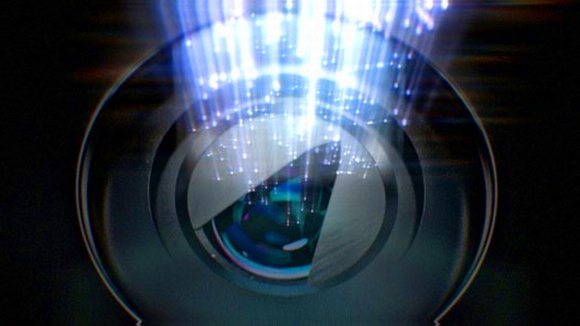 |
|||
| Mechanical lens cover of Nokia Lumia 1020 photo: Nokia |
|||
Clearly, even if it's dark
Lumia 1020's matrix is - like the matrix in Lumia 920 - the second generation 41-megapixel sensor. Trails were frayed by the matrices included in Nokia 808 PureView. With 1.1 micron BSI provides a better quality pictures even in low light conditions. The photographic matrix has physical size of 1/1,5 inches and thus it is 3 to 5 times larger than the typical matrix placed in smatrtphones. It is possible to perform both high-resolution zooming and pixel oversampling allowing for submitting one superpixel out of 7 pixels. Oversampling, which results in a smaller resolution than the maximum - in 1020 is 5 megapixels - resulting in better colour and sharpness and less noise in the output. This process consists in reducing a huge photo to a smaller one, which looks better and is still ready to print in high quality.
 |
|||
| Photo matrix of Nokia Lumia 1020 photo: Nokia |
|||
Optical image stabilization system, which first appeared in Nokia Lumia 920 PureView, lived to see the improvements and the model 1020 is equipped with a second generation system. There is a chance to make a successful photograph in motion. When there is not enough light, users have the aid of two illuminating systems: LED and Xenon flash, the same as in ordinary cameras. Those who take pictures know that with the parameters of photo cameras mounted in smartphones it is very difficult to balance the sharpness of images in poor light. Nokia assures that it succeeded.
Lenses
The camera with a sensor size of 41 megapixels is a collaboration of Nokia with Carl Zeiss company. There was increased the number of lens elements from 5 to six lenses. The first lens is made of high precision glass, while the rest is high-performance plastic. The lenses are quite large as for a camera in a smartphone. The entire system is packaged in a stabilization system that uses micro-motors to move the lenses.
 |
|||
| Lenses of Nokia Lumia 1020 photo: Nokia |
|||
Impossible resolution
I wrote about the sensor resolution – it is 41 megapixels without a doubt, but it should be borne in mind that the shape of the matrix prevents taking pictures in such resolution - take a look at the pictures. Nokia Lumia 1020 takes photos up to a resolution of 38 (3:4 aspect ratio) or a 34-megapixel (16:9 aspect ratio). Photos in these resolutions are unlikely to be printed, but you can of course view them in pretty good quality on domestic big screens.
 |
|||
| Distribution of resolution in Nokia Lumia 1020 photo: Nokia |
|||
The most important is that together with taking a big picture there is also included a resolution of 5 megapixels, which is the result of skillful reduction of the size with increasing the quality. This can be boldly printed on the right paper and boast with the mobile which takes pictures like a good compact. The output images have natural colours, are sharp and have a vanishingly low noise. The camera automatically saves both pics. Nokia calls it "dual capture" and prompts users to play in exploring a big picture details that are visible on a small one.
 |
|||
| Light lens and the matrix of Nokia Lumia 1020 photo: Nokia |
|||
Why 5 and not more?
Why is there 5 megapixels, and not, let's say 8 or 12? Nokia argues that this size of the file is easy to share or print in A3 format. The rest of the explanation seems to me a marketing waffle. I propose you another way: if engineers and programmers have developed an optimal algorithm consisting of seven pixels into one, so a matter of size, is only simple mathematics. If the number of pixels in the 36 MP matrix is divided by those in the 5 MP matrix, then without rounding there comes about 7.5 pixel, and with rounding - 7.2 (36:5 = 7.2).
 |
|||
| Oversampling: a typical camera in a smartphone and Nokia Lumia 1020 photo: Nokia |
|||
It's just an assumption and a guess and not statement based on shared Nokia materials. With eight megapixels there would suffice 4 pixels to oversampling, with twelve - two. I have no idea how this would translate into the loss of image quality, but 7 is more than 4 or 2. For the purpose of marketing it is the right choice. I guess that a superpixel composed of seven, technically is also better.
And here I must sadly conclude this somewhat lengthy discussion based on documents published by Nokia. I invite next week for the second part, where I will try to answer some technical details and write about capabilities of the camera. If you do not want to wait, the document in English and photos taken by the camera can be downloaded here:
- Nokia Lumia 1020 White Paper (warning, PDF)
- Nokia Lumia 1020 sample images:
 |
 |
 |
 |
| Aircraft | In the park | Collective | Statue |
| Sample images for download above in two resolutions photo: Nokia |
|||
Source Nokia