

Xiaomi 17




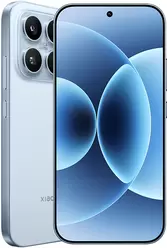



-
 6.3" OLED
1220 x 2656 px
Aspect ratio: 19.6:9 -
 151.10 x 71.80 x 8.06 mm
191.00 g
-
 50 Mpx
Front: 50 Mpx
-
 Si-Car 7000 mAh
Si-Car 6330 mAh (EU) Wireless battery charging, Quick battery charging -
 12 GB, 16 GB
-
 256 GB, 512 GB
-
 Qualcomm Snapdragon 8 Elite Gen 5 SM8850-AC
-
 3Q 2025
(1 year 1 month ago) -
 868.49 C2T
Battery capacity to thickness ratio
-
 89.50%
Screen-to-body ratio

| Brand |
Xiaomi XiaomiSmartphones |
|---|---|
| Model name | 17 |
| Other names | 25113PN0EC, 25113PN0EG |
| Announced |
3Q 2025 (1 year 1 month ago) |
| Type | Touch |
| Waterproofness & dust-resistance | IP68 |
| Dimensions | 151.10 x 71.80 x 8.06 mm |
| Weight |
191.00 g
Buy case |
| Colour |
Available in 5 variants:
|
| Display |
Color / OLED 68,7 billions colors, 120 Hz, Touch sampling rate 300 Hz 1220 x 2656 px (6.30") 464 ppi max. luminance 3500 nits [cd/m²] ∼89.5% screen-to-body ratio |
| Display protection |
 Buy screen protector |
| Talk time (max.) |

|
| Stand-by (max.) |
|
| Standard battery |
Si-Car 7000 mAh Si-Car 6330 mAh (EU) Buy powerbank |
| Battery rated capacity |
6860 mAh 6160 mAh (EU) |
| Quick battery charging |
|
| Charger included in the package |
|
| Wireless battery charging |
Charger power 50 W
|
| Internal memory |
Available in 2 variants:
|
| RAM memory |
Available in 2 variants:
|
| Memory cards |

|
| Operating system | Android 16 |
| Interface | HyperOS 3 |
| Processor |
Qualcomm Snapdragon 8 Elite Gen 5 SM8850-AC
Processor clock: 4.60 GHz Number of cores: 8 GPU: Adreno 840 |
| Standards |
GSM, UMTS, LTE, 5G
read more
|
| Touchscreen |
|
| DualSIM |
|
| SIM card(s) | nanoSIM, nanoSIM |
| DualSIM mode | dual standby |
| Hybrid DualSIM |
|
| EAN |
Available in 8 variants:
|
| MPN |
Available in 8 variants:
|

ADDITIONAL INFORMATION
-
22,5 W wired reverse fast charging, 22,5 W wireless reverse fast charging. IP68 acording to IEC 60529.

PICTURES FROM THIS PHONE


CAMERAS - BACK
-
Camera typeStandard
-
Photo sensor modelOmniVision Light Fusion 950
-
Photo matrix50 Mpx
-
Sensor size1/1,31
-
Pixel size1,2 µm
-
Digital zoom
-
Focal length23 mm
-
Flash LED
-
Video resolution7680x4320
-
Video formatsH.264, H.265, MPEG4 - 30 fps
-
AdditionalAF, Laser AF, OIS, f/1.67
-
Camera typeTelephoto
-
Photo sensor modelSamsung S5KJN5
-
Photo matrix50 Mpx
-
Sensor size1/2,75
-
Pixel size0,64 µm
-
Resolution8192x6144 px
-
Digital zoom
-
Focal length60 mm
-
Flash LED
-
AdditionalAF, Laser AF, OIS, f/2.0
-
Camera typeWide-angle
-
Photo sensor modelOmniVision OV50M
-
Photo matrix50 Mpx
-
Sensor size1/2,88
-
Pixel size0,612 µm
-
Resolution8192x6144 px
-
Digital zoom
-
Field of view102 °
-
Focal length17 mm
-
Flash LED
-
AdditionalFF, EIS, f/2.4

CAMERAS - FRONT
-
Camera typePortrait
-
Photo sensor modelOmniVision OV50M
-
Photo matrix50 Mpx
-
Sensor size1/2,88
-
Pixel size0,612 µm
-
Resolution8192x6144 px
-
Digital zoom
-
Field of view90 °
-
Flash
-
Video resolution3840x2160
-
AdditionalAF, f/2.2

SENSORS
-
Accelerometer
-
Proximity
-
Light
-
Magnetometer
-
Gyroscope
-
Barometer
-
Altimeter
-
Gravity
-
Hall-effect
-
Iris scanner
-
Fingerprint scannerUnder the screen
-
Thermometer
-
Hygrometer

DATA TRANSFER
-
HSDPA42.20 Mbit/s
-
HSUPA11.52 Mbit/s
-
HSPA
-
HSPA+
-
LTE DL
-
LTE UP
-
GPRS
-
EDGE
-
Bluetooth
v5.4
Buy headphones
-
A2DP Profile
-
Bluetooth audioSBC, AAC, aptX, aptX HD, aptX Adaptive, LDAC, LHDC 5.0, LC3, MIHC
-
WiFi
v802.11 a/b/g/n/ac/ax/be
read more
-
Miracast
-
DLNA
-
Infrared
-
USB
v3.2 OTG
Type-C Buy adapter -
GPS module
-
A-GPS
-
GLONASS support
-
Beidou
-
Galileo
-
QZSS support
-
NavIC support
-
NFC

COMMUNICATION AND MESSAGING
-
Call waiting
-
Conferency
-
Call forwarding
-
Push To Talk
-
Instant Messenger
-
SMS
-
SMS Memory
-
MMS
-
Dictionary
T9
-
e-mail client
-
e-mail protocolsPOP3, IMAP4, SMTP
-
RSS Reader

MULTIMEDIA
-
Radio
-
MP3
-
Stereo speakers2 speakers
-
Audio Jack
-
HD Voice
-
Sound formatsAAC, AAC+, AMR, APE, FLAC, MID, OGG, WAV, eAAC+
-
Java
ART
-
Videophone

PIM AND ADDITIONAL FUNCTIONS
-
Watch
-
Stopwatch
-
Alarm
-
Calculator
-
Organizer
-
Calendar
-
Flight mode
-
Data and fax
-
Voice dial
-
Speakerphone
-
Recorder
-
Vibrations

POPULARITY CHART


Your rating

 To your site

 Compare data


Lukasz
@Greg. Congratulations, you have exchanged something superior for something inferior. The S26 is nothing more than the S23, but with an inferior Exynos processor, which performs worse under load than the Snapdragon in the Xiaomi 17, while being even more power hungry and heating up more, in addition to being less efficient and experiencing greater throttling. That is why after the S23 I bought the Xiaomi 15, because I saw the direction Samsung was taking. A small battery, still extremely slow charging, an inadequate telephoto lens, a main camera that is average by today standards and a weak wide angle lens. Samsung basically introduces nothing to its smartphones except for the Ultra models, and even there the cameras are falling behind the top flagships from China. However, I know that software and AI alone will not fix many hardware level shortcomings that Samsung has been neglecting for years.
Greg
For years, I used only Samsung S series devices, from the S5 all the way to the S23. A few months ago, I decided it was worth giving Xiaomi a chance. I was tempted by the great screen, very fast charging, and a compact size similar to the S23. I thought: why pay more for a Samsung? I bought the Xiaomi 17 and used it for about 2 months. Unfortunately, despite the very good hardware, I could not convince myself to like it. Only then did I realize how much I had grown accustomed to many small functions known from One UI. I am talking about seemingly small things like the free arrangement of icons, the way the Phone and Contacts applications work, call handling, or the general logic of the interface. These are not groundbreaking features, but on a daily basis, such details determine the comfort of use. After two months, I sold the phone on OLX, and the next day I bought a Samsung S26. The S26 is not perfect. It charges slower than the Xiaomi, but I returned to a system that simply works the way I am used to. For me, it was a valuable lesson: technical parameters alone are not everything. The ecosystem and user habits are of great importance. Personally, I will not return to Xiaomi again.