



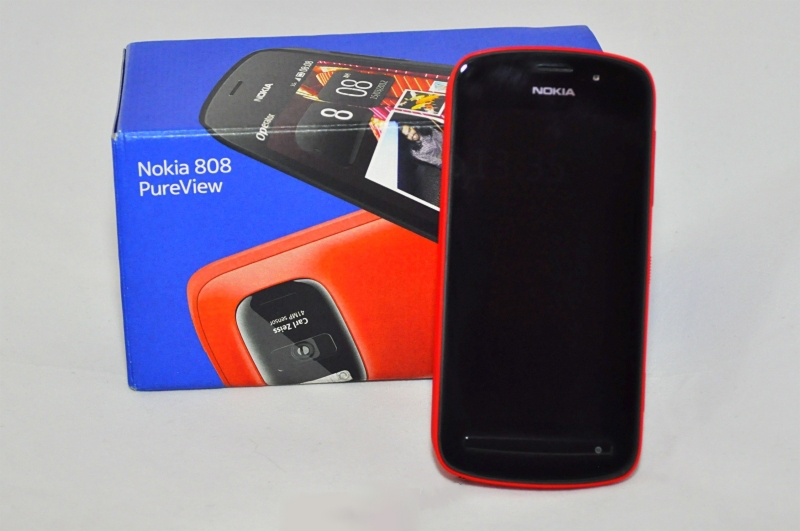
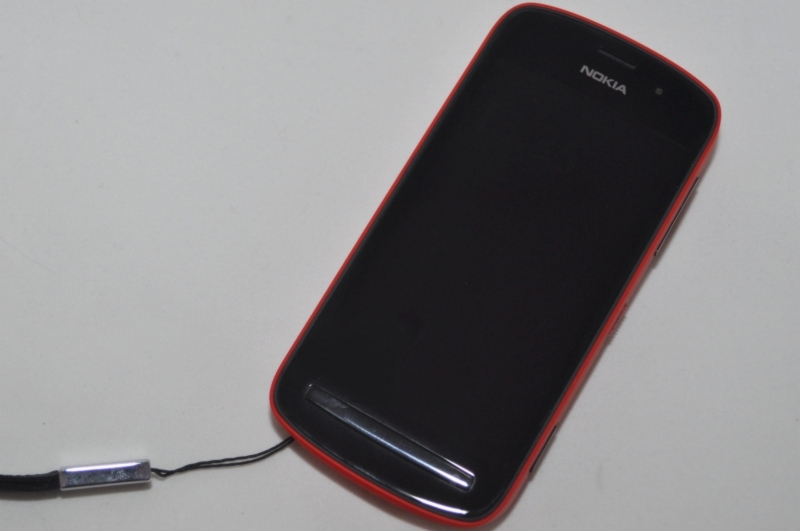
This time an extraordinary phone came into my hands. Here's award winning Nokia 808 PureView with a 41 megapixels camera. It's a modern smartphone, equipped with a processor clocked at 1.3 GHz, 512 MB RAM and a 4-inch AMOLED screen. And the system ... Symbian Belle! Why?!
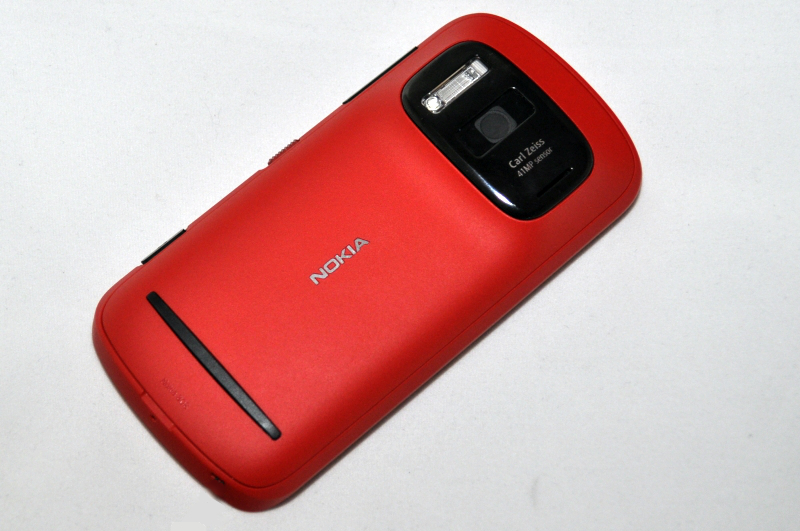
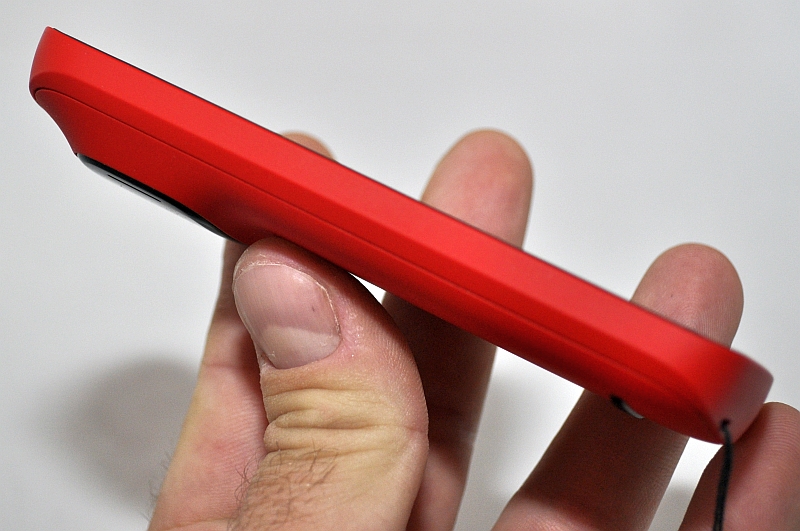
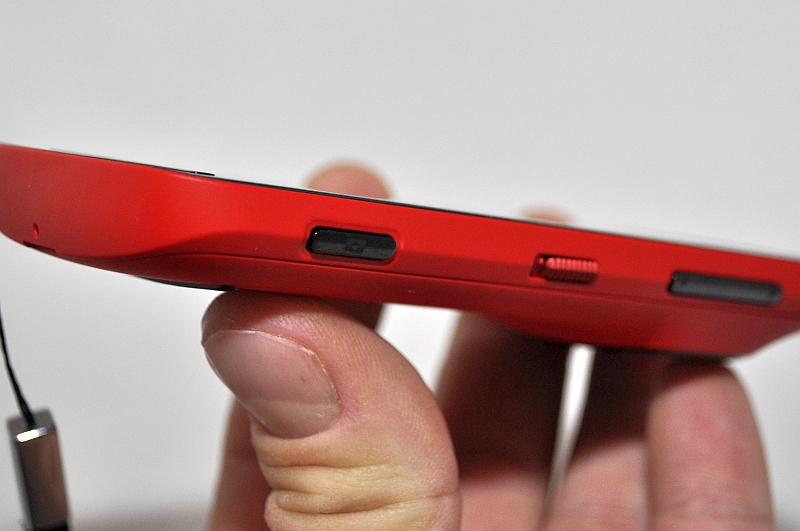
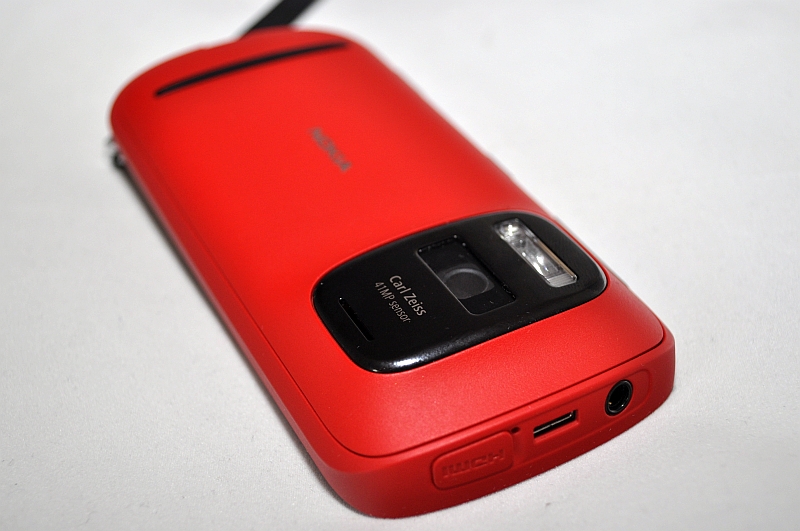
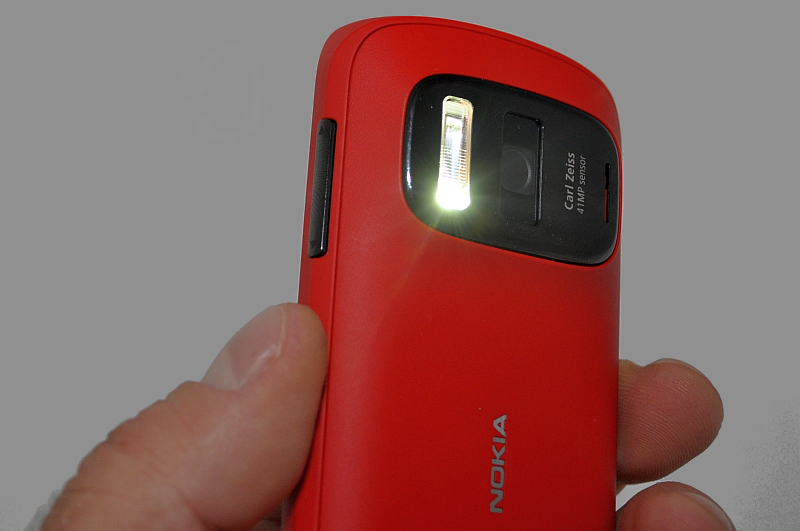
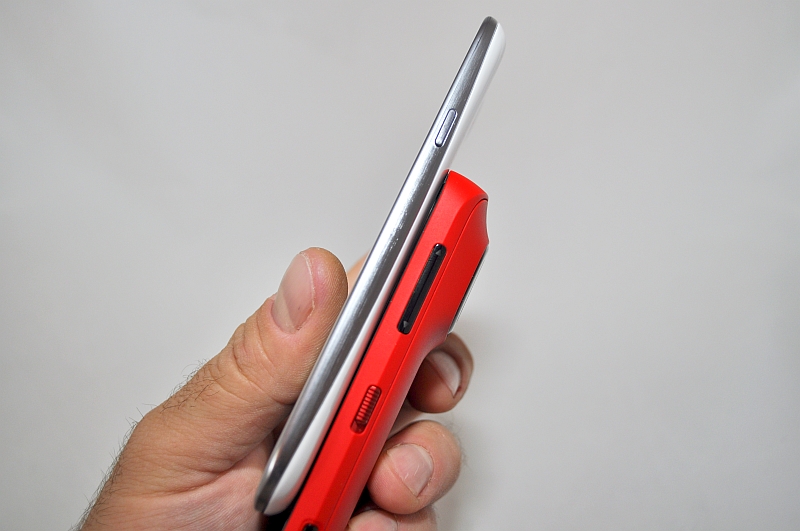
Nokia after all abandoned the platform, going hard in the direction of "windows"! This model has also weight of almost 170 g. Despite the sizeable weight, 808 lies very well in the hand. The impression of solidity enhances large thickness of the casing. However, the back was shaped so as to fit perfectly in your hand - but rather male hand. The design is very well balanced, and the matte texture of the sides and the back wall provides an excellent grip. Other elements, which I pointed out, are side buttons. Among them, a great, sliding lock of the phone, which by the way is also a switch of LED flashlight. There is also a large camera key and a volume control.
 |
 |
||
| Nokia 808 photo: GSMchoice.com |
|||
 |
 |
 |
|
| Nokia 808 photo: GSMchoice.com |
|||
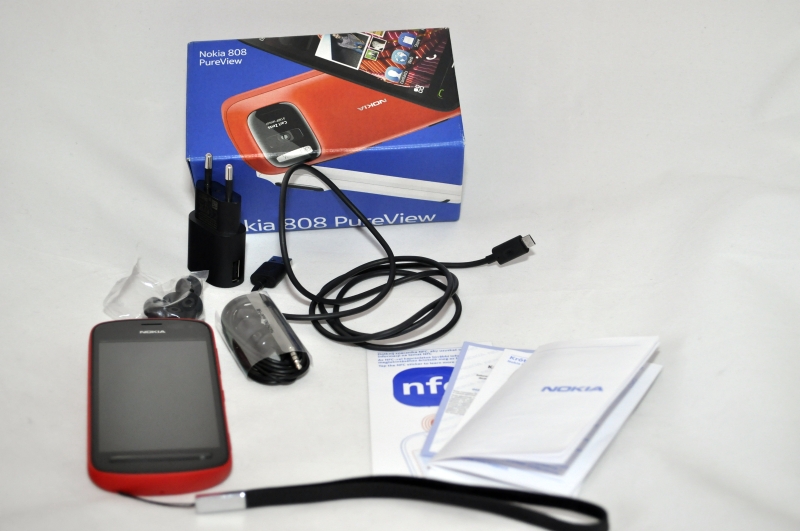
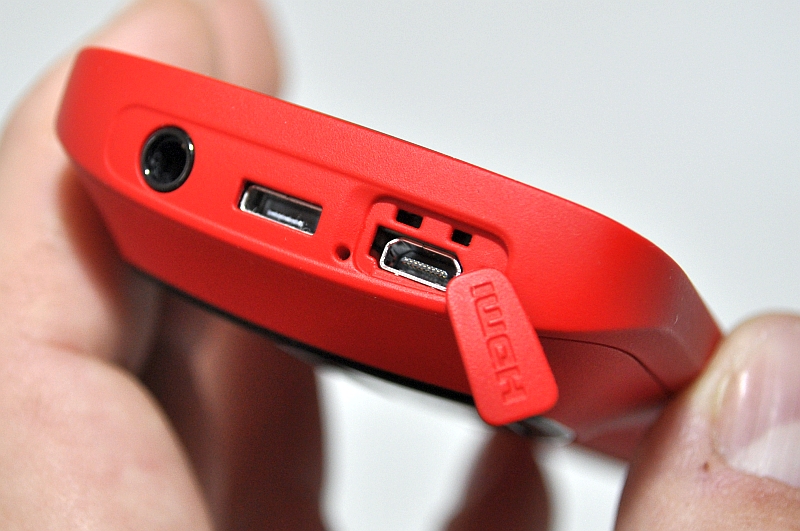
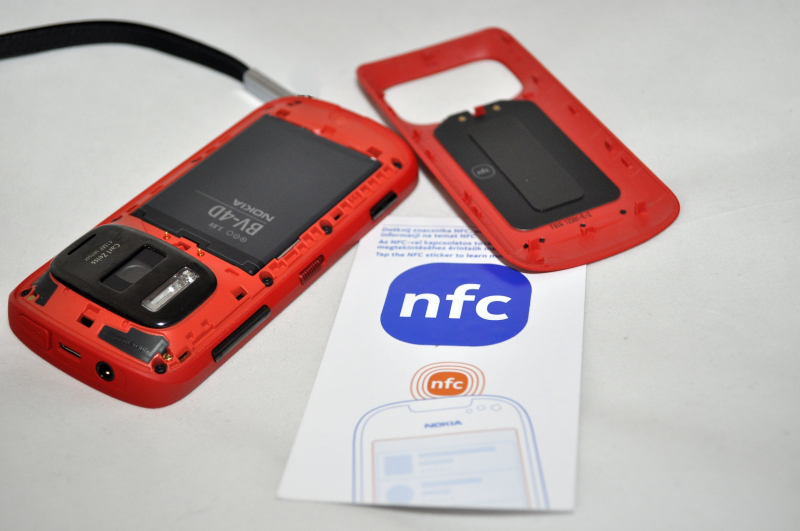
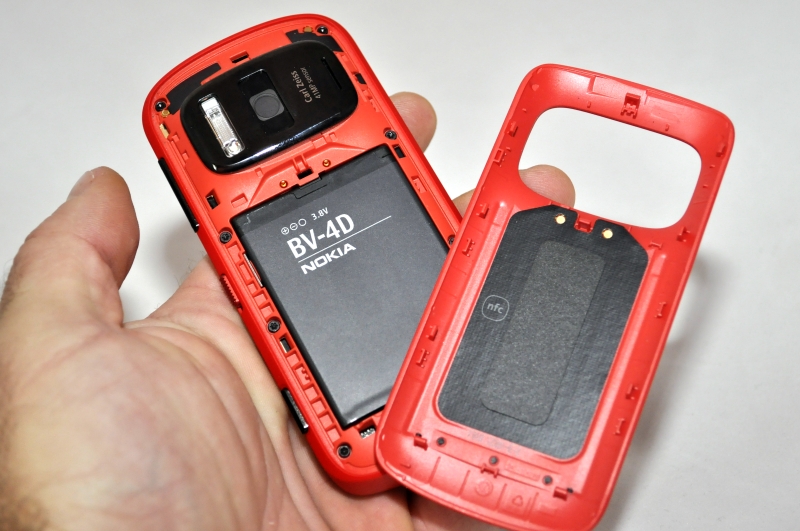
I can not forget about the connection. In addition to microUSB we have a mini-audio jack, which is opposite the microHDMI exit, the only covered with the hinged cap. The front of the phone is a black panel hiding the display, under which there is placed the three-key keyboard. Everything is beautifully assembled - no cracks, no backlash, the plastic has a very good quality. The set, attached to the phone, also did not disappoint. Besides the classic elements like the USB cable and a charger, you'll have ear type earphones with silicone pads and ... a wrist strap. The set also features NFC tag, triggering a demonstration of the technology. With NFC we can activate various functions of the phone by touching the tags, we can associate a mobile with peripheral devices, and in the future - I hope - we can also pay that way at any retail store. NFC antenna is located on the inside of the battery cover, which is in a form of a "cap", latching around the casing. Under this cover, we find a battery with a capacity of 1400 mAh, while deeper there are a microSD card and a microSIM slot. The display disappointed me a little. Apparently AMOLED, a colour palette also not bad ... but a little weak resolution like not from today. As a consolation, the screen has good viewing clarity and decent brightness and the material covering it has a good durability. The touch panel also shows no noticeable shortcomings.
 |
 |
 |
|
| Nokia 808 photo: GSMchoice.com |
|||
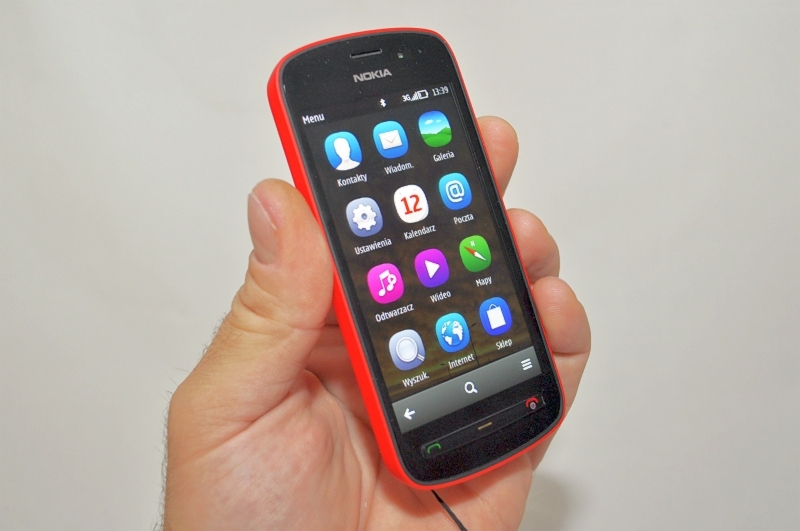
On Symbian Belle there was already poured a sea of ink, so I will confine myself to what is the most important. Everything works smoothly, although a few times I had to reboot the phone which was quite effectively suspended. It is possible that it was the ailment of my trial copy ... The phone has a few additional factory applications. Among them there is an application to support DLNA, F-Secure suite and Office Mobile, as well as news and social networking sites. 808 also has programmes to support image displaying on an external screen, mobile hot-spot and the IC and the other, typical office and operational functions.
 |
 |
 |
|
| Nokia 808 photo: GSMchoice.com |
|||
There was also mounted a FM transmitter that lets you listen to music on any radio. The transmitter has a wide range of adjustment, but the sound quality is worse than via the wire transfer or Bluetooth. And if we talk about the sound, I mention that the speaker built-in close to the camera plays quite clearly. A music player, in addition to the typical functions, has Dolby system deepening sound, and an equalizer with five defined settings. There is no option to enter your own settings. The headphones - as for a factory equipment - play really well, they lie excellent in the ear and provide good isolation from outside sounds. The software has free maps from Nokia with car and pedestrian navigation also acting offline. We have the ability to customize the interface and dashboards to our requirements and the offer of the app store, despite the end of platform, is still quite rich. It is worth noting the possibility of ranking the menu icons according to our tastes, as well as easy (by pressing and holding) adding shortcuts and widgets on the screens.
 |
 |
 |
|
| Nokia 808 photo: GSMchoice.com |
|||
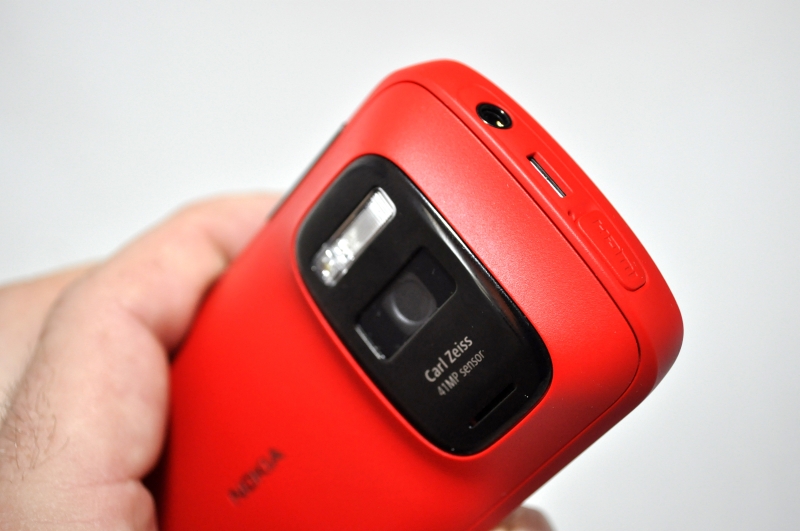
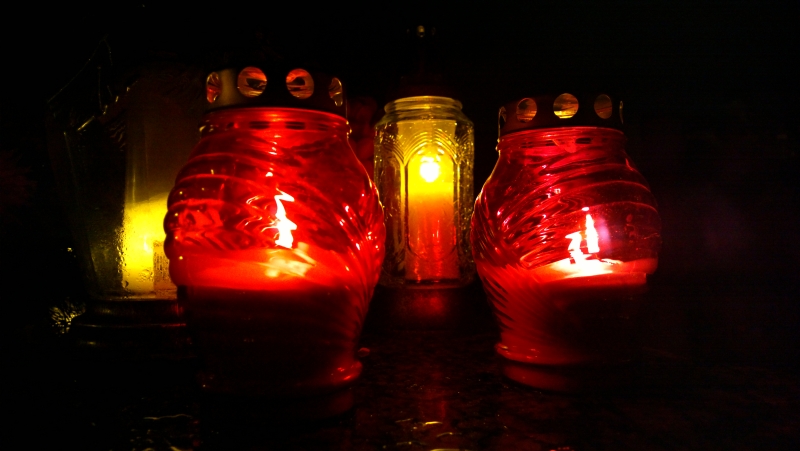
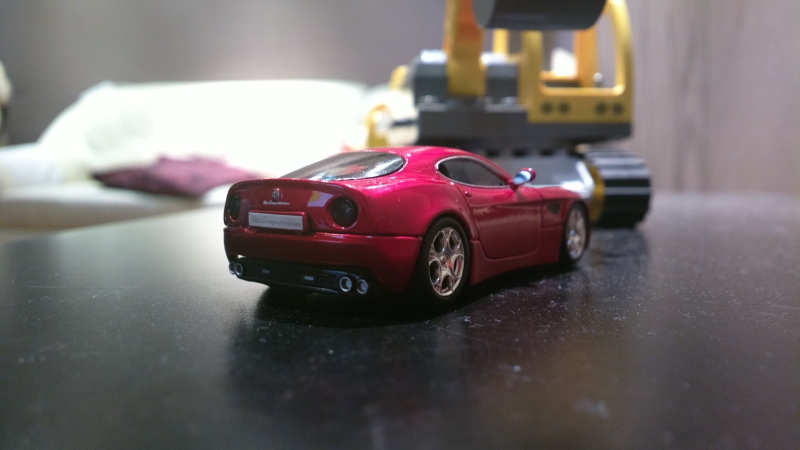
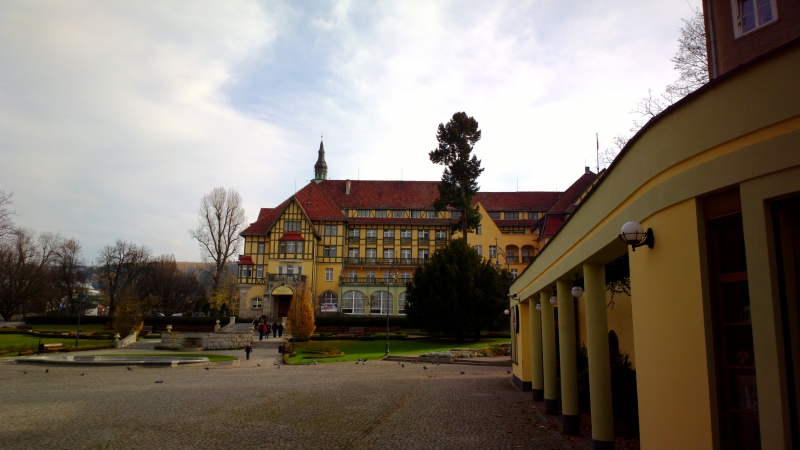
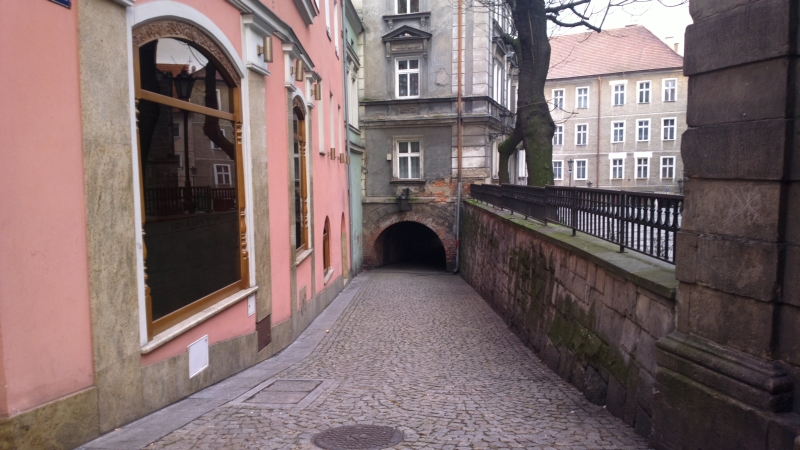
Let's get to the 41-megapixel camera. It has a complex, five-element optics with f / 2,4 aperture, branded by Zeiss, a mechanical shutter and a dual flash - using flash LED and Xenon torch with a miniature reflector. We serve the camera through a simple interface. We can work in three modes: manual, semi- and fully automatic. As for a decent camera, we are able to self-correct exposure, sensitivity and white balance. We can change the colour balance, saturation, sharpness, and contrast. A snapshot offers us delayed start, self-timer and bracketing mode. We can remember the three predefined settings. In a semi-automatic mode, we find nine thematic programmes. A nice addition is the virtual ND filter, taking out details from the bright elements of the background to prevent overexposed spots. At the end - we have yet to decide whether to use the full resolution matrix, or use PureView mode. In the latter case, we can use a smooth approximation of the frame, but most of all - we will gain the quality of photos. PureView mode is a kind of oversampling, where while saving of one pixel, there is combined information from seven neighbouring pixels. This allows, for example, to obtain at a 5-megapixel shot a much higher number of well-mapped details than at similar shot taken with an ordinary camera. The same goes for colour reproduction: not one pixel bue a few deals with a collection of information about each of the three components. The result - better saturation. We gain a digital zoom - but not one to which we have become accustomed in mobile phone cameras. There is no digital noise – a frame is not artificially enlarged, and only cut from a larger original. The advantage of the dense matrix size is not a shot size but its high quality, which was achieved despite the small size of the sensor, forced by its implementation in the phone.
 |
 |
 |
|
| Photos from Nokia 808 photo: GSMchoice.com |
|||
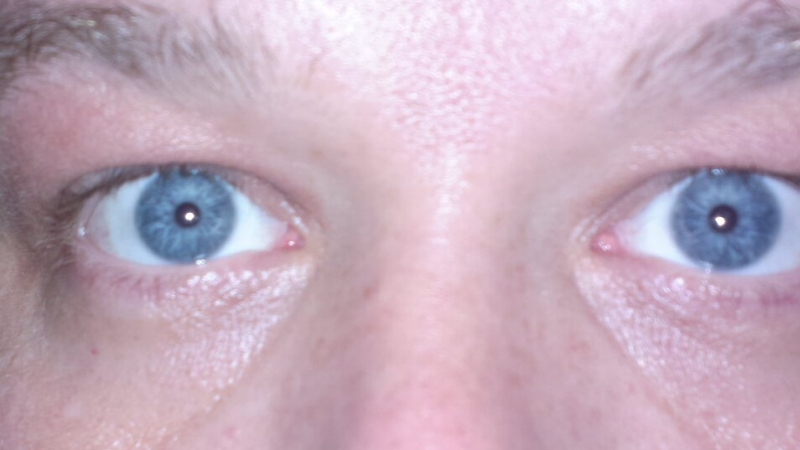 Red eyes reduction
photo: GSMchoice.com
 |
 |
 |
|
| Photos from Nokia 808 photo: GSMchoice.com |
|||
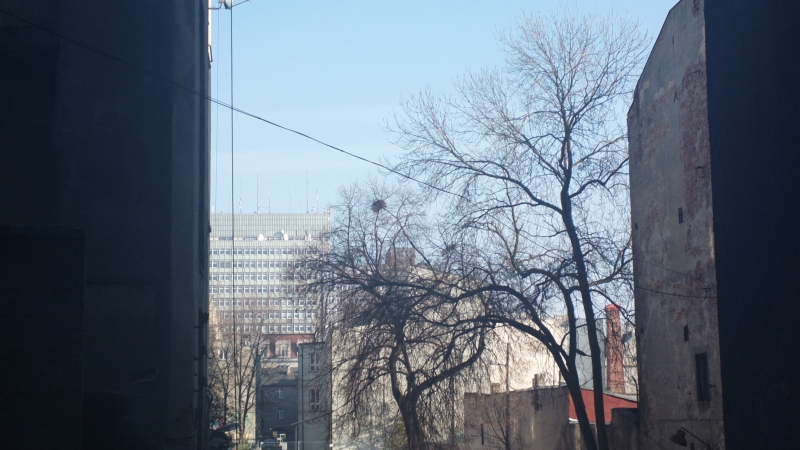
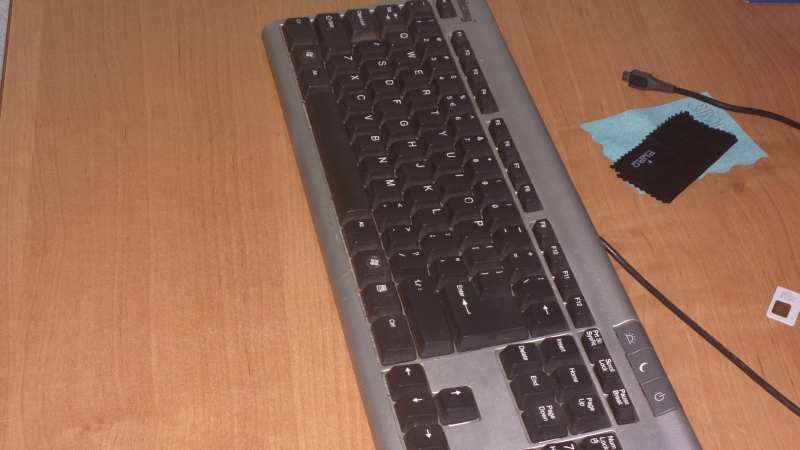
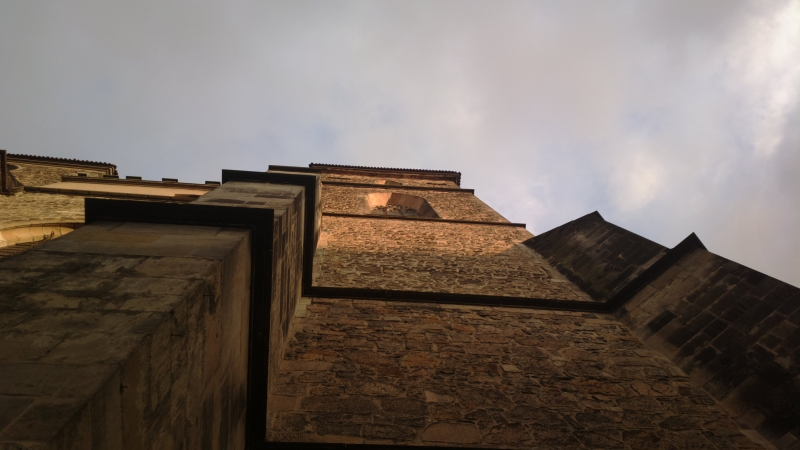
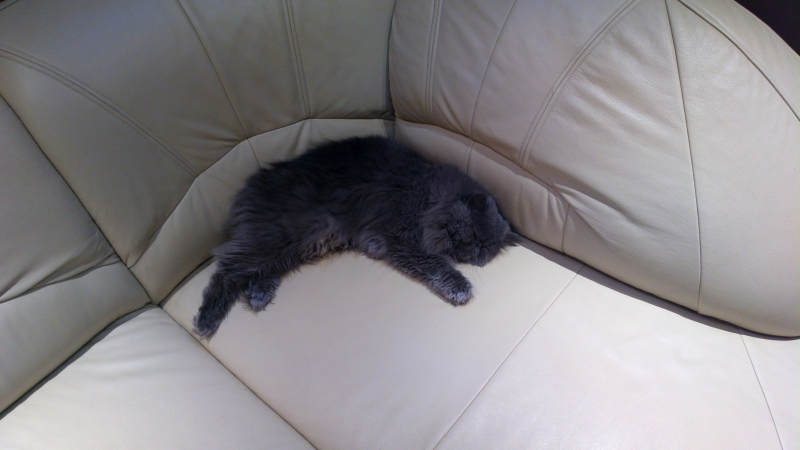
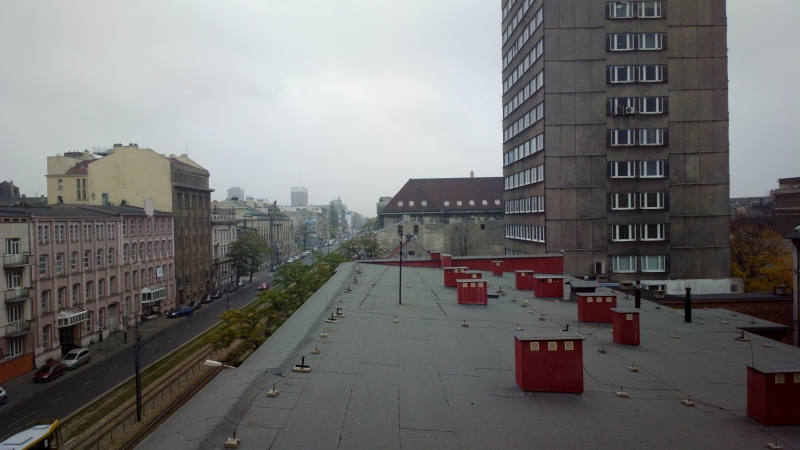
I could write much more about the photos, but ... I prefer to invite you to watch them in the gallery on the phone card. You'll find yourself, what 808 can do! Pay attention to the label, which is displayed when you hover over the thumbnail. Remember that images embedded in the text were scaled to the requirements of publication, but the full version you can see - in the gallery on the phone card .
 |
 |
 |
 |
 |
 |
|
| Photos from Nokia 808 photo: GSMchoice.com |
|||
The videos are recorded in the "standard" FullHD, but they show good details and colours mapping. The only problems we see only when shooting fast-moving objects... but as a consolation we get digital stabilization. Here's a short sample:
| A sample video of N808 video: GSMchoice.com through YouTube |
|||
There is the issue of a battery performance left to discuss. If we don’t use photographic assets of 808 too much, we can expect even 4 days without charging. As for a smartphone - it's almost a miracle;)
Nokia 808 PureView is not a cheap phone. Although it has already passed a lot of time from the release, this model did not get too much popularity. It remains regrettable that Nokia has not decided to introduce such a camera to models with a newer system, condemning the lovers of photography to a contact with a dying Symbian ...
At the end I invite for a short video presentation...
| Presentation of Nokia 808 video: GSMchoice.com through YouTube |
|||
Source GSMchoice.com



 18.06.2026


