



The use of PenTile matrix-type in the Samsung Galaxy S III surprised almost everyone. AMOLED is not even to AMOLED and there are doubts whether the PenTile technology certainly should be included in the flagship model of Samsung.
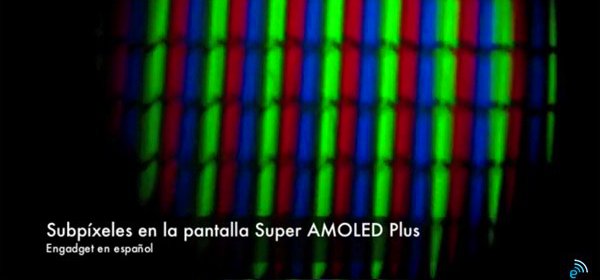
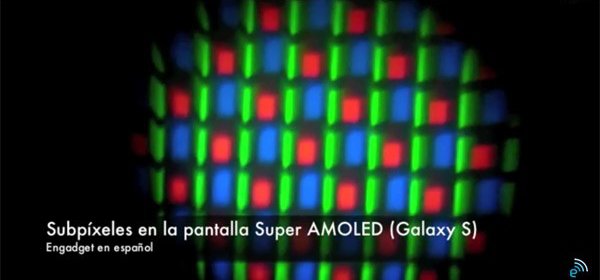
The standard RGB (Red - Green - Blue) matrix uses three pixels of similar size, while the PenTile matrix has the order of RGBG (Red - Green - Blue - Green), where the green pixel is divided in half and placed between each pair of Red - Blue pixels. AMOLED displays have a very good contrast, but for the astute observer there is not a big problem to notice the difference in quality between a typical RGB AMOLED screen, and a screen manufactured using PenTile. Especially if the display has a significant size.
The introduction somewhat lengthy, but probably necessary to understand the problem. Samsung Galaxy S III has a 4.8 inch AMOLED display with a resolution of 720p. Using PenTile does not seem to be the best solution, but the manufacturer claims that this is precisely the best one because it has been used to extend the life of the display. The fact is that in addition to many advantages (contrast, colours, good visibility with sharper angles of vision), AMOLED displays have the disadvantage associated with the loss of the display properties. With time, the image quality simply deteriorates, and faster wearing out blue pixels are responsible for that.
 |
 |
||
| Super AMOLED Plus (RGB) and Super AMOLED (PenTile) photo: Engadget, Spain |
|||
In this context there is a nagging question. Should owners of mobiles such as Galaxy S II - in which there was installed standard RGB - have to fear? Indeed, for similar reasons, HTC, which is the creator of Nexus One, had to give up their time AMOLEDs for the Super-LCD. The answer must probably be yes. Philip Berne from Samsung explained in an interview with MobileBurn service that PenTile provides a nearly constant image quality when using a smartphone 18 months and longer. The standard AMOLED may lose parameters much earlier.
PenTile in Samsung Galaxy S III, or in Galaxy Note is to be indistinguishable to the naked eye from the AMOLED RGB in Galaxy S II, where the screen has smaller resolution. - Indistinguishable for most users. Apparently there is no blurring of colour on the edges of graphics, or other handicaps.
Samsung is constantly working towards improving the standard AMOLED RGB displays. Indeed, such a display was placed in the Samsung Galaxy Tab 7.7. I admit that I am curious about the display of the new Galaxy. Gladly I would take it in hand and compare with that in Galaxy S II. - What I recommend to all lovers of the brand, preferably before replacing the old model for a new one.
Source MobileBurn


