



New flagships of the local tycoon were presented in Taiwan today: Asus ZenFone 7 and Asus ZenFone 7 Pro. Smartphones - just like last year - amaze with the unique mechanism of the camera.
Flippy camera
And it was the camera that was the main focus in marketing communication. I am not surprised, because the solution is surprising, but - as I found out a year ago - it can be very useful and practical under certain circumstances. The smartphone has only one camera, placed in a movable "periscope" leaning out of the back wall. When the camera rests, hidden in the outline of the housing - it looks like an ordinary rear camera. When it unfolds - it is located above the display, acting as a selfie camera.


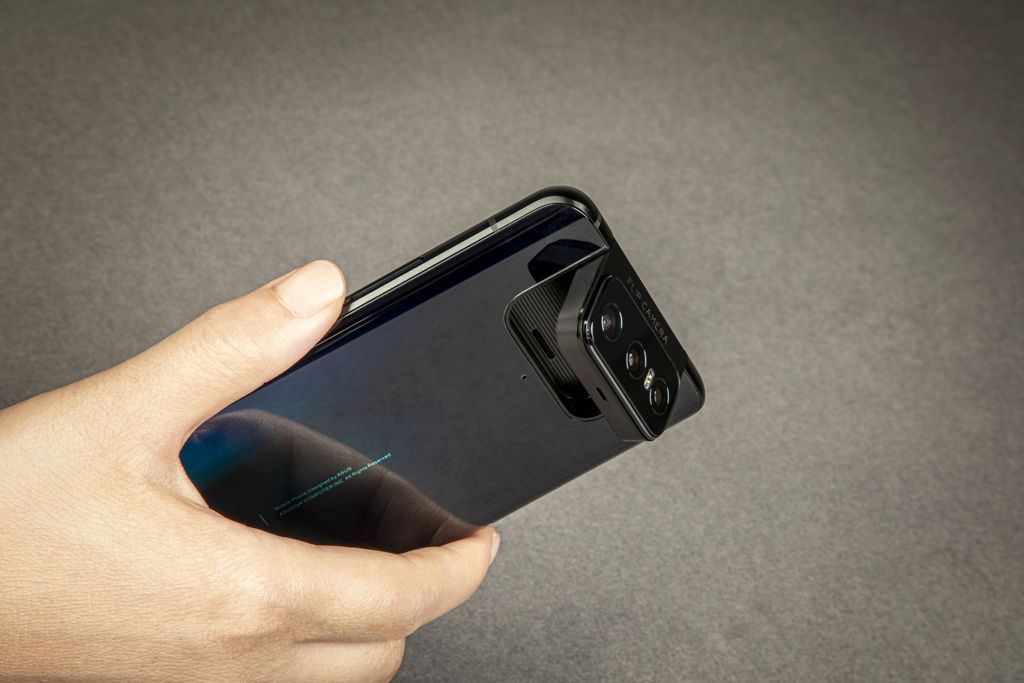
photo: Asus
In addition - the boom with the camera can be set at different angles, which makes it easier to frame photos, and also - makes the phone a kind of a tripod. In addition - we get exactly the same quality of photos and camera capabilities - be it in classic or selfie photography. The Auto Panorama feature can now use the camera with an ultra wide angle lens, allowing you to take wide panoramic shots. In addition, Motion Tracking 2.0 automatically tracks subjects and smoothly zooms in, always keeping the subject in the center of the frame. The flippy camera module is constructed of liquid metal and powered by a new, simplified, yet more efficient stepper motor. The acceleration sensor detects when the phone is falling and automatically returns the flippy camera to a safe position.


photo: Asus
Three lenses
Of course, these possibilities have been expanded compared to last year's model. Now the camera is triple. The main photographic module is a 64-megapixel Sony IMX686 (f/1.8) matrix, while wide-angle photos are taken by the Sony IMX363 12 Mpx, f/2.2 camera. In addition, this camera supports macro shots from up to 4 cm. Their work is supported by a third, 8-megapixel camera with a telephoto lens, providing a 3x lossless zoom and 12x digital zoom. In ZenFone 7 Pro, the main and tele cameras are enhanced with four-axis optical image stabilization. Smartphones allow you to record videos at a maximum resolution of 8K and has professional-class video recording functions such as HyperSteady, Wind Filter and Mic Focus (microphone concentration). The devices have three microphones.


photo: Asus
Screen without a notch
The 6.67-inch AMOLED NanoEdge Full HD+ screen with an image refresh rate of 90 Hz and a response time of 1 ms, covering the entire front surface, is notch-free and stands out with realistic colour reproduction. The screen also supports HDR10+ technology. A maximum brightness of 700 nits increases readability, and the dimming technology reduces screen flickering in low light for a comfortable viewing experience. The display has been certified by SGS Testing Certification Services as an Eye Care screen that reduces blue light levels by 70% compared to most LCD smartphones available.


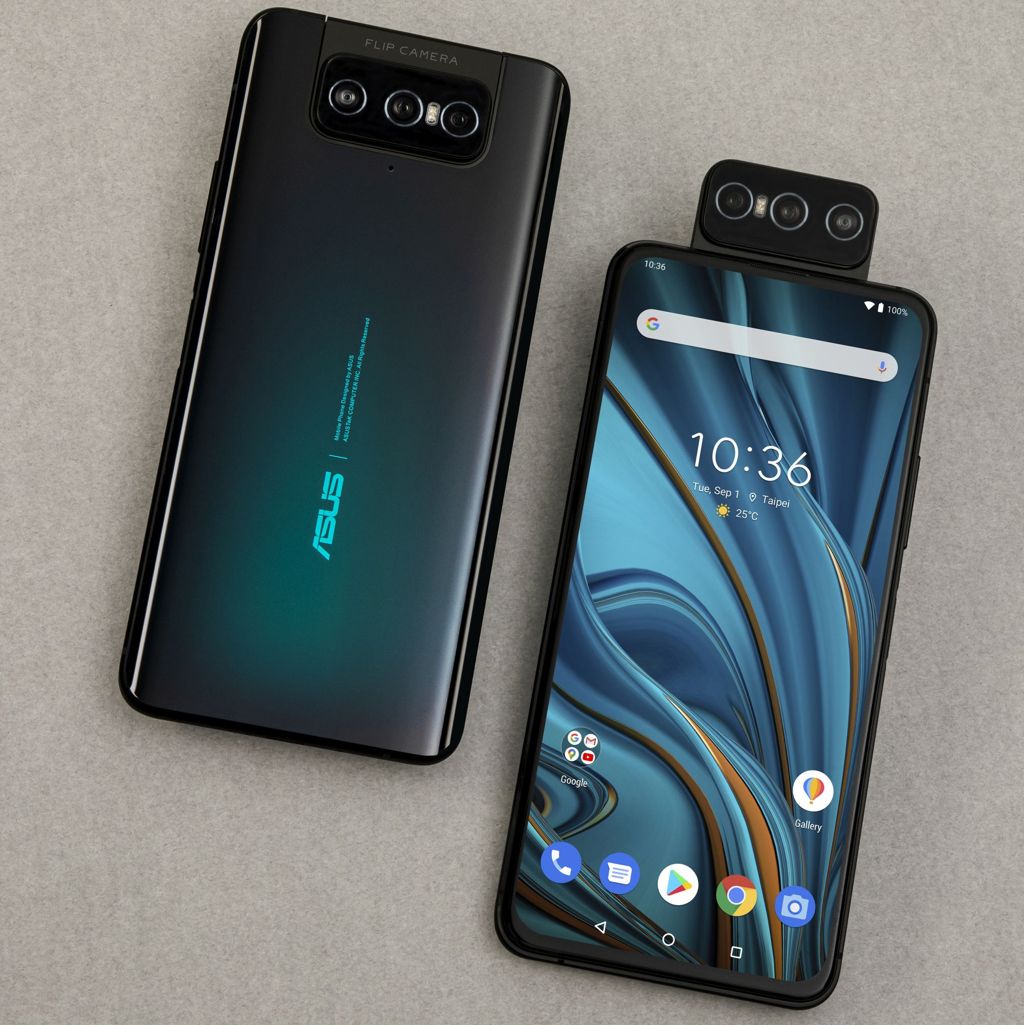
photo: Asus
Flagship interior
The heart of the new Asus flagships is the Snapdragon 865+ chip with a 5G modem, supported by LPDDR5 operational memory and UFS 3.1 mass memory. Fast memories are available in capacities: 6 or 8 GB RAM and 128 GB flash in Zenfone 7 and 8+256 GB in Zenfone 7 Pro. The 5000 mAh battery lasts for two days of use without interruption, and the Qualcomm Quick Charge technology allows it to be quickly charged.


photo: Asus
Improved interface
ZenUI 7, the enhanced interface, provides essential functions for easy and intuitive operation. In this generation, ZenUI 7 offers more settings for personalization, including the option to adjust the colour and shape of icons, as well as the font. In addition, users can change system animations. The smart button has been moved to the side of the phone and integrated with the power button and the fingerprint reader, allowing the user to conveniently unlock the phone or use command shortcuts. It can be personalized to run specific, frequently used functions, including Google Assistant tasks. It offers double-tap and press-and-hold modes that can be assigned to different actions.


photo: Asus
All necessary communication modules
Both models are equipped with 5G network support, as well as NFC modules, Wi-Fi 6, Bluetooth 5.1 and a USB-C port. There is no minijack, but we have DualSIM and a separate microSD card slot - the slot is triple. The following sensors are also on board: an accelerometer, a digital compass, a proximity sensor, an ambient light sensor, a gyroscope, a rotation angle sensor and a hall sensor. Smartphones support the navigation systems GNSS, GPS (L1/L5), Glonass (L1), Galileo (E1/E5a), BeiDou (B1/B2a), QZSS (L1/L5) and NavIC (L5). The devices measure 165.08 x 77.28 x 9.6 mm and weigh 230 g each.

photo: Asus via YouTube
Prices...
The prices are as follows:
- Asus ZenFone 7 6+128 GB - 21990 TWD, 750 USD
- Asus ZenFone 7 8+128 GB - 23990 TWD, 817 USD
- Asus ZenFone 7 Pro 8+256 GB - 27990 TWD, 954 USD


photo: Asus via YouTube
Asus ZenFone 7 Pro go to specification →


-
 6.67" AMOLED
1080 x 2400 px
6.67" AMOLED
1080 x 2400 px
Aspect ratio: 20:9 -
 165.08 x 77.28 x 9.60 mm
230.00 g
165.08 x 77.28 x 9.60 mm
230.00 g
-
 64 Mpx
-
 Li-Ion 5000 mAh
-
 8 GB
8 GB
-
 256 GB
-
 Qualcomm Snapdragon 865+
-
 3Q 2020
-
 520.83 C2T
Battery capacity to thickness ratio
520.83 C2T
Battery capacity to thickness ratio
-
 84.20%
Screen-to-body ratio
84.20%
Screen-to-body ratio
Asus ZenFone 7 go to specification →


-
6.67" AMOLED
1080 x 2400 px
Aspect ratio: 20:9 -
165.08 x 77.28 x 9.60 mm
230.00 g
-
64 Mpx
-
Li-Ion 5000 mAh
-
6 GB, 8 GB
-
128 GB
-
Qualcomm Snapdragon 865
-
3Q 2020
-
520.83 C2T
Battery capacity to thickness ratio
-
84.20%
Screen-to-body ratio
Source Asus



 16.04.2026


